
 0My Cart


Introduction:
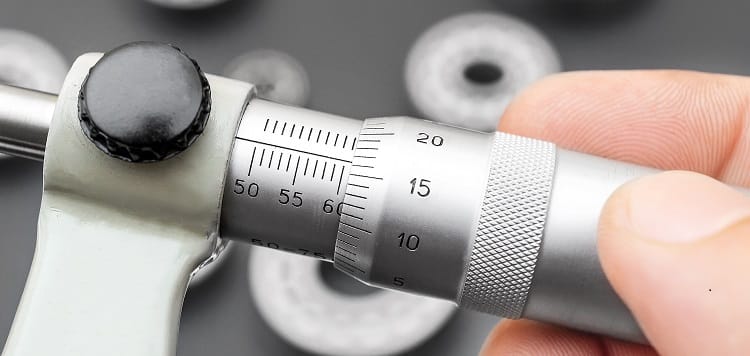
Precision measurement is critical in machining, engineering and quality control and a good micrometer delivers accuracy far beyond that of standard calipers — often down to 0.001 mm or ±0.00005″. MITUTOYO is the go to brand for machinists, inspectors, and engineers worldwide. Did you know, the first batch of Mitutoyo micrometers was produced in a small lot at Kamata, Tokyo in 1937!
While the micrometer basic principle has not changed since the 19th Century, new features and innovations are introduced to help boost your day to day measuring needs. Here’s our 6 best Mitutoyo micrometers guide for — helping you decide which of these professional-grade instruments you should choose!
6 best Mitutoyo micrometers guide types:
- The Digital Micrometer
- The Quick Micrometer
- The Ultra Accuracy Micrometer
- The Interchangeable Micrometer
- The Counter type Micrometer
- The Original Micrometer
- Micrometer Table Comparison
The Digital Micrometer:

Found in the majority of workshops, this is currently the most popular type of micrometer in use today due to the high accuracy and accessibility! The main feature is a digital display screen that accurately shows the reading.
Boosting IP65 certification and great Japanese quality, the Mitutoyo digital micrometer stand out as industry leaders.
- Easy reading and holding the value at any point in time
- Eliminates Parallax error, which occurs when taking readings against the thimble graduation from analog micrometer.
- Setting of origin at any point of the measurement
- Switching of units from mm to inches(for models that support)
- Exporting results to computer for SPC purposes(with optional input accessory).
- Disadvantage is that it requires a battery to work but typical battery life for a Mitutoyo micrometer to be 2-3 years with the SR44 battery.
Click here to learn more and purchase the Digital Micrometer!
The Quick Micrometer:
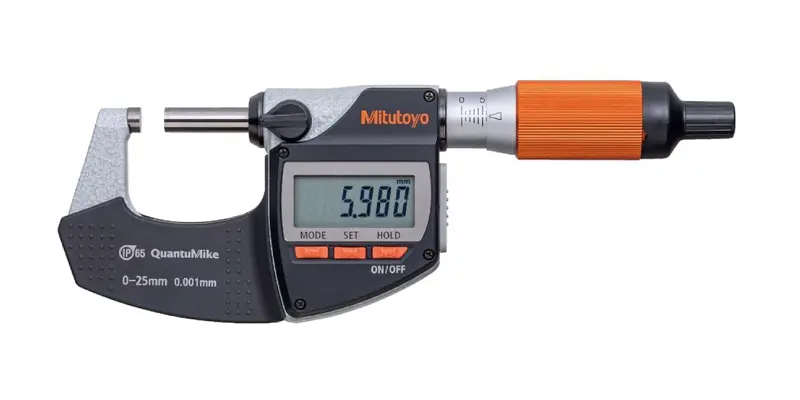
If you ever find taking micrometer readings to be too slow, check out the Quantumike by Mitutoyo! Recently released, it uses innovative technology with a 2mm/rev spindle feed, making it 4 times faster than conventional micrometers while having all the advantages of the regular Digital Micrometer. Check out the video below to see the speed comparison!
- All advantages of the digital micrometer.
- Faster measurements, useful when measuring parts of various sizes due to the improved spindle speed.
- Speed warning feature in the event that contact on part is too fast which results in non-consistent readings.
- Slightly higher price point compared to a normal digital micrometer however the time saved more then makes up the cost increase!
Click here to learn more about the Quantumike!
It has also won the prestigious iF Design Award 2026!
The Ultra Accuracy Micrometer:
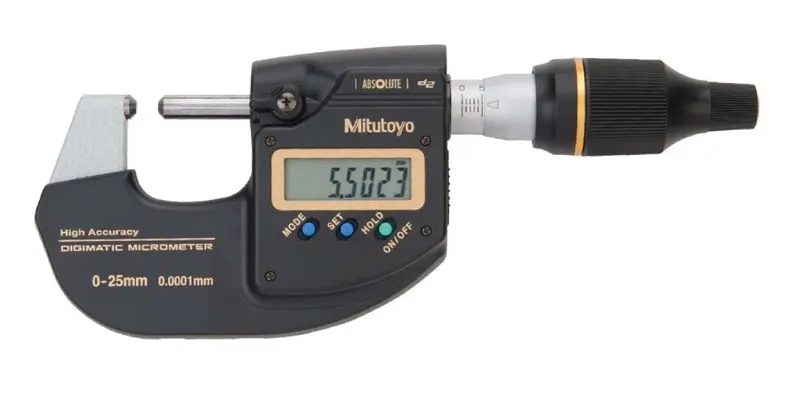
For when 1 micron is not good enough, you require the pinnacle of micrometer accuracy which is the Ultra High Accuracy Micrometer.
This micrometer is Mitutoyo flagship model with their innovative ABS rotary sensor and screw machining technology, enabling it to accurately measure with a Sub-micron resolution of 0.0001 mm or 0.00002 inches the highest accuracy micrometer in this 6 best Mitutoyo micrometers guide.
- Highest accuracy of 0.5um handheld device in market, only available in 0-25mm/1″.
- All advantages of the digital micrometer.
- Removable heat shield is provided which helps minimize error caused by thermal expansion of the frame.
- Price reflects the innovative ABS technology and screw machining expertise required to achieve 0.0001mm resolution.
Click here to learn more about the Ultra-High Accuracy Micrometer!
The Interchangeable Micrometer:

When you have parts of large and various sizes but still require accuracy. the Interchangeable Anvil Micrometer is the best fit for you. Available in both analog and digital types if required.
- Interchangeable anvils between 4 to 6 pieces per set to achieve a wider measuring range compared to the typical micrometer.
- Able to measure large sizes of up to 1000mm for large engine or machined parts.
- Well designed frame to balance being easier to handle without sacrificing the structural stiffness required for accuracy.
- Setting standards included for zeroing of micrometer after changing anvil.
Click here to learn more about the Interchangeable Anvil Micrometer!
The Counter type(Digit) Micrometer:
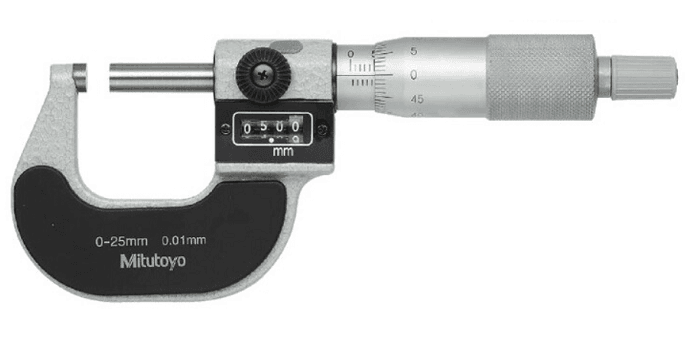
One of the early innovations pioneered for micrometers is the inclusion of a counter to the micrometer. The Digit Micrometer gets its name from the counter on its surface which displays the measurement results up to 1/100mm.
- Removes Parallax error which occurs during reading of the Vernier scale for analog micrometers.
- Battery-free operation compared to the digital micrometers
- Reduces operator fatigue in taking measurements compared as can be taken directly from the counter.
Click here to learn more about the Digit Micrometer!
The Original Micrometer:
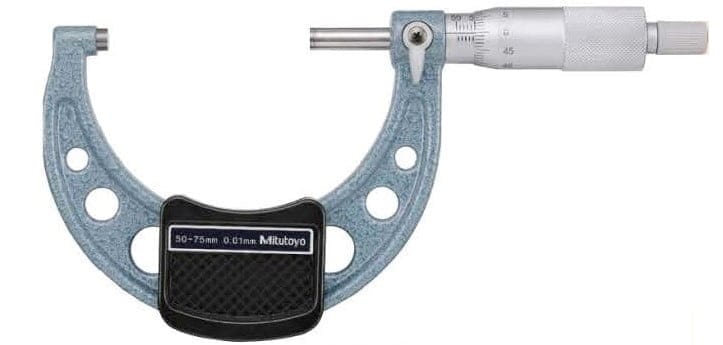
Last but not least for the 6 best Mitutoyo micrometers guide, we have the original analog micrometer from which all the other micrometers have developed from. It still remains as the most cost effective way to do measurements, however it is being gradually phased out by the digital types.
- High quality with carbide tipped measurement face for precision and durability
- Well contrast graduated lines to improve readability of the scale.
- Cheapest most cost effective micrometer for taking measurement readings.
Click here to learn more about the Analog Micrometer!
6 Best Mitutoyo Micrometers Guide Table Comparison:
| Digital Micrometer | Quantumike | Ultra-High Accuracy Micrometer | Interchangeable micrometer | Digit (counter) Micrometer | Analog Micrometer | |
| Price | $$ | $$$ | $$$$$ | $$$ | $$ | $ |
| Resolution | 0.001 | 0.001 | 0.0001 | 0.01 (*0.001 for digital types) | 0.01 (*0.001 with Vernier scale) | 0.01 |
| Ease of use | ✔✔✔ | ✔✔✔ | ✔✔✔ | ✔✔ | ✔✔ | ✔ |
| Special feature | Digital display, reduces reading error. | Quicker measurements with faster spindle. | Highest accuracy in market of 0.1μm. | Wide measurement range for large parts. | Counter for easier reading compared to Vernier | The original design and lowest cost. |
| Best for | Production floor, day to day use for easy measurement. | QC, Calibration labs which require checking different parts quickly | Calibration labs, Critical products for when measurement accuracy is paramount. | Factories, engineers for measurement of large parts. | Businesses/hobbyist easy to read and low-maintenance solution | Businesses/hobbyist looking for most budget friendly, low-maintenance solution |
| Reference models: | 293-240-30(0-25mm), 293-340-30(0-25mm/1″) | 293-140-40(0-25mm), 293-180-40(0-25mm/1″) | 293-100-20(0-25mm), 293-130-20(0-25mm/1″) | 104-139A (analog 0-150mm), 340-351-30 (digital, 0-150/6″mm) | 193-111(0-25mm), 193-211(0-1″) | 103-137(0-25mm), 103-138(0-50mm)
|
Conclusion: Selecting the Right Micrometer for Precision Measurement
The right micrometer is critical to maintaining accuracy, consistency, and quality control in your manufacturing or inspection process. Different applications require different types of micrometers and this 6 best Mitutoyo micrometers guide has given you the information of the accuracy, flexibility or cost-effectiveness of the various types.
However, whether you’re using standard micrometers or advanced solutions, the goal is the same—reliable, repeatable measurements you can trust and MITUTOYO remains the go to brand for the industry. Reach out to us Regional Tech Pte Ltd as the local specialist for Mitutoyo items and support!
If interested for more, you can view our basic introduction guide to micrometers here!
Also, remember to regularly send gauges for calibration and learn about its importance here!
For more posts click here: Latest News & Events!
If you’re looking for a groundbreaking variety of precision tools, Find Us!